
So what is barre, exactly? It is a ballet-inspired class that builds strength, posture, and balance through small, controlled movements at a fixed handrail and on the mat. If you have wondered what is barre and whether it belongs in your week, here is the plain version, no dance tights required. You do not need a dance background, and you do not need to touch your toes to begin. At RÓS Pilates in Henderson, barre sits right next to our Reformer and Mat classes as a way to get stronger without pounding your knees or hips. Consider this your plain walkthrough: how a class actually feels, how it stacks up against Pilates, and whether it fits your body.
What Is Barre, and Where Did It Come From?
The short answer is that barre borrows three things at once: poise from ballet, core control from Pilates, and light resistance work from strength training. You stand at a ballet barre, which is really just a handrail for balance, and move through tiny, repeated pulses that tire a muscle without heavy weights or jumping. People still ask what is barre, because it pulls from ballet, Pilates, and strength work all at once. According to Cleveland Clinic, the method strengthens the muscles across your chest, shoulders, hips, and back so they support better posture, and its light resistance is gentler on your joints than high-intensity training.
There is real history behind it too. A dancer named Lotte Berk built the first version in London in 1959, mixing her ballet training with the exercises she used to rehab a back injury. The method reached New York in the early 1970s, and studios like Pure Barre and The Bar Method grew from that root. So the class sitting on your schedule today has more than sixty years of refinement behind it, even if the name still sounds new to a lot of people. Ask a longtime member what is barre and they will point to that lineage as easily as to yesterday’s class. The shapes have been tested on real bodies for decades, and the safest, most effective versions are the ones that survived.
Inside a Class at Our Henderson Studio
A session runs about 45 to 60 minutes and moves in a steady, predictable order. You warm up, spend time at the barre for legs and arms, drop to the mat for core, then stretch to close. The gear stays minimal: a pair of two to three pound hand weights, a resistance band, and sometimes a small ball tucked behind a knee or between the thighs. Your own bodyweight does most of the work, so almost anyone can jump in on the first day. New members often ask what is barre going to feel like, and the honest answer is a slow, controlled burn rather than a sweaty scramble.
The pace is deliberate rather than frantic. Music runs underneath, an instructor calls the count, and you rarely move fast. That slowness is the whole point, because small ranges of motion under steady tension are what fatigue a muscle at a light load. When people picture what is barre, they rarely expect how much the standing leg work at the rail will ask of them. If a set ever feels like too much, you set the weights down and keep moving through the pattern until the group catches back up with you.
In our Henderson classes, the thing first-timers mention most is the shake in their thighs during standing leg work. We tell them that tremble is the muscle fatiguing, not a signal to quit, and coach them to breathe through it instead of fighting it. We also keep the groups small on purpose, so an instructor can walk over mid-set and nudge your hips into a straighter line before it becomes a habit.
What is barre good for?
The class is built around muscular endurance, and that style of training pays off even at a light load. The American College of Sports Medicine advises that every adult do activities that maintain or build muscular strength and endurance at least two days a week, per its Physical Activity Guidelines. Two barre classes a week lines up with that guidance almost exactly, which is a big reason we suggest it as a starting rhythm.
You might still wonder what is barre actually doing for your body, and the headline is muscular endurance built rep by rep. The benefits of barre stack up over regular practice. Posture is usually the first thing people notice, because so much of the class asks you to lengthen your spine and draw your shoulders down while you move. Desk workers tend to feel that shift fastest. Beyond posture, you build core stability, better balance, and the kind of quiet control that makes everyday movements, like lifting a toddler or carrying groceries up the stairs, feel easier. Because the impact stays gentle, it also suits women who are easing back into exercise after a long break, a pregnancy, or a stretch of desk-bound years, without the joint strain of running or heavy lifting.
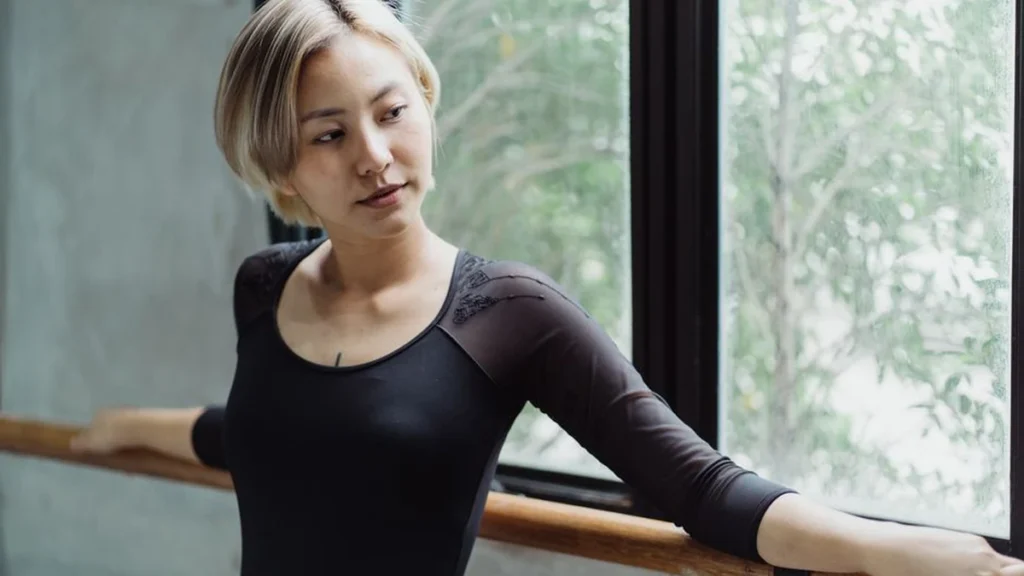
Barre vs Pilates: A Family Resemblance
Is barre Pilates? Not quite, though the two are close cousins. So what is barre next to Pilates? A close cousin that swaps machine springs for a handrail and a set of light weights. Barre uses Pilates principles of control and core work, then adds ballet-style pulses and standing sets at the rail. Pilates keeps the focus on precise movement from the center, either on a mat or on the Reformer, where springs supply the resistance. Knowing what is barre makes that comparison click, because the two share a spine of core control. When people weigh barre vs Pilates, the honest read is that you do not have to pick a side. Many of our members fold both into one unlimited membership and rotate through the week. Here is how the formats compare at the studio.
| Format | Main focus | Equipment | Impact | Drop-in at RÓS |
|---|---|---|---|---|
| Barre | Ballet-inspired strength, posture, endurance | Ballet barre, light weights, band | Low | $30 |
| Mat Pilates | Core control, bodyweight strength | Mat and small props | Low | $26 |
| Reformer Pilates | Full-body, spring-resistance strength | Reformer machine | Low | $40 |
| Lift & Sculpt | Strength and conditioning blend | Weights and mat | Low to moderate | $35 |
What Beginners Notice in Their First Class
A barre workout for beginners is one of the friendlier ways to start moving, because the steps are simple and the rail gives you something solid to hold. Nobody is going to ask you to dance or fold yourself in half on day one. Most people who come to us for barre have never touched a ballet barre before, and that is exactly who the class is designed around. A first-timer’s real worry is rarely what is barre on paper, but whether they can keep up with the group. Understanding what is barre before you walk in takes most of the first-day nerves off the table.
You will probably feel it the next day, usually in the outer thighs, the glutes, and the deep core. That is normal, and it eases as your body adapts over the first few weeks. Is barre a good workout for that trade-off? For endurance, posture, and joint-friendly strength, it genuinely is, which is a large part of why it has held its spot on studio schedules for decades.
A few small things make the first class smoother:
- Wear leggings and a fitted top you can move freely in.
- Bring grippy socks, or pick up a pair at the front desk.
- Arrive five to ten minutes early to meet your instructor and get set up.
- Expect your legs to shake during thigh work. That is the muscle doing its job.
- Modify anything that does not feel right. Every move scales up or down.
- Tell the instructor about any injury before class so they can adjust your setup.
How Barre Fits Into Your Week
Two to three classes a week is a sustainable rhythm for most beginners. By your fourth or fifth class, you stop asking what is barre and simply book the next spot that fits your morning. It gives your body time to adapt and recover while still building real strength. Come to barre a couple of times a week, mix in Reformer or Mat when you want variety, and let the habit do the quiet work. You can book a barre class online in a couple of taps. As you get stronger, add sessions or lean on one of our instructors for personal training to fine-tune your form.
If you came in asking what is barre and left wondering whether it counts as strength training, the answer is yes. Does barre build muscle? It builds lean, enduring strength rather than bulk, recruiting the small stabilizing muscles that heavier lifts tend to skip. It can support weight loss as part of a balanced routine, but it is not a big calorie burn like running, so pair it with sensible nutrition if that is your goal. If you are driving in from Green Valley, Seven Hills, or Anthem, you can see the full timetable and reserve a spot from our full class schedule whenever you feel ready.
The fastest way to understand barre is to stand at the rail yourself. Small groups, hands-on instructors, and a warm studio on Horizon Ridge. Reserve a barre class online or call (702) 772-1271 and we will help you pick a start time.
Book a ClassOr call us at (702) 772-1271Frequently asked questions
What is barre, in one sentence?
Barre is a ballet-inspired class that blends Pilates core work with light strength training. You use small, controlled movements at a handrail and on the mat to build muscular endurance, posture, and balance. No dance background or flexibility is needed to start and feel successful in your first class.
Is barre harder than it looks?
For most first-timers, yes, in the best way. The moves look gentle, but holding a pulse in one spot fatigues a muscle quickly. Your legs may shake during thigh work, which simply means the muscle is tiring. You can always pause or lighten any exercise the moment you need to.
Do I need ballet experience to take barre?
Not at all. The barre is only a handrail for balance, and you will never be asked to dance or perform steps. Our Henderson classes are built for people who have never held a ballet barre. Plenty of members Googled what is barre the night before their first class and still left smiling. Instructors cue every movement slowly and offer an easier option throughout the class.
How is barre different from Reformer Pilates?
Barre keeps you mostly upright at a rail, using bodyweight and light weights for endurance. Reformer Pilates puts you on a spring-loaded machine that adds smooth resistance in every direction. Both are low-impact and core-focused, and many members rotate between the two across a single week for variety.
How often should I take barre as a beginner?
Two to three classes a week is a comfortable starting point. It gives your muscles time to adapt and recover while still building noticeable strength and posture. Consistency matters more than intensity here, and most people feel a real difference within about a month of steady practice. Once people settle into that rhythm, the question of what is barre fades and the progress speaks for itself.
What should I wear and bring?
Wear fitted leggings and a top you can move in, and bring grippy socks so your feet stay planted at the barre. Water is welcome. Arrive five to ten minutes early for your first class so we can set you up and answer any questions before we start.
RÓS Pilates is a boutique wellness and fitness studio in Henderson, NV, offering Reformer, Mat, Hot Pilates, Barre, and Lift & Sculpt, plus 1:1 and duo Personal Training. Our instructors are certified and teach every class in small groups. Ready to start? Book a class or call (702) 772-1271. See all our classes.